
 REQUEST A QUOTE








20 Things You Didn’t Know About Electrostatic Discharge And ESD Furniture

20 Facts About the ESD Industry That Most People Have Never Heard
1. Did you know that the human body cannot feel a static discharge below approximately 3,000 volts — but electronic components can be permanently destroyed by as little as 10 to 100 volts? By the time you feel that familiar zap, you’ve already exceeded the damage threshold of most modern chips by a factor of thirty or more.
2. Did you know that ESD protection isn’t a modern invention? As far back as the 1400s, European and Caribbean military forts were already implementing static control procedures to prevent electrostatic discharge from accidentally igniting their gunpowder stores.
3. Did you know that the majority of ESD damage events in a production environment are completely invisible and silent? No spark, no sound, no sensation. The component just gets quietly destroyed — and nobody in the room notices.
4. Did you know that simply walking across a carpeted floor can generate up to 35,000 volts of static charge on your body — but that exact same action in a high-humidity environment produces only around 1,500 volts? The air in your facility is either your ally or your enemy, depending on how well it’s managed.
5. Did you know that ESD damage doesn’t always kill a component immediately? A large portion of ESD events produce what the industry calls “latent defects” — invisible internal wounds that allow the component to pass every quality test, ship to the customer, and then fail weeks or months later under normal operating stress. By that point, tracing the failure back to an ESD event on the production floor is nearly impossible.
6. Did you know that NASA has documented cases where components damaged by ESD during assembly passed all pre-launch testing, only to fail under the vibration of launch or the thermal cycling of space — long before their expected end of life?
7. Did you know that the first dedicated ESD symposium was held in Denver in 1979, and that it was convened almost exclusively to deal with ESD problems in military electronics? Commercial electronics ESD standards came significantly later.
8. Did you know that some major electronics manufacturers report that up to 25% of all identified electronic part failures are caused by ESD? One in four. That’s not a niche problem — that’s a structural one.
9. Did you know that the transparent anti-static shielding bags you see used everywhere in electronics packaging were only invented in the early 1980s? Before that, sensitive components were routinely shipped with little to no electrostatic protection.
10. Did you know that plastic — one of the most common materials in any workplace — is one of the worst possible surfaces to have near electronic components? Common plastics are insulators that actively accumulate and hold static charge, making a standard plastic table or tray a genuinely hazardous surface in an electronics environment.
11. Did you know that the human body’s sweat layer is actually classified as a conductor? It’s one of the natural pathways through which charge dissipates from your skin — which is also why ESD risk increases in dry conditions, when the skin is less conductive.
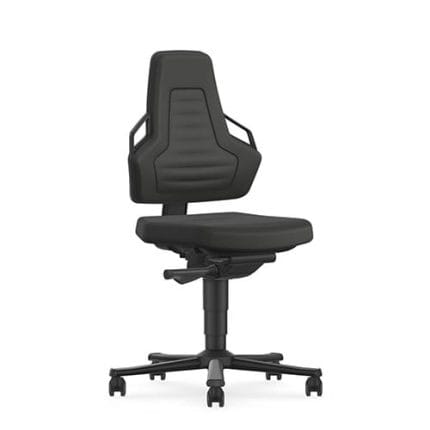
12. Did you know that simply standing up from a chair is classified by ASHRAE research as a significant generator of static charge? This is precisely why ESD chairs with dissipative upholstery and conductive casters exist — every time an operator rises from a standard office chair near sensitive components, a static event is a real possibility.
13. Did you know that an ESD event is technically a subset of a broader phenomenon called Electrical Overstress (EOS), which is defined as exposure to a voltage or current beyond a device’s maximum rating? ESD is fast and sharp; EOS can be slower and just as destructive. The two are often confused, and misdiagnosis leads to the wrong corrective actions.
14. Did you know that kangaroo leather shoes were once identified as the cause of a major ESD failure affecting an entire product line distributed across Australia? An engineer was found to be generating 18,000 volts simply by shuffling his feet — traced entirely to his footwear material. The product had to be re-engineered.
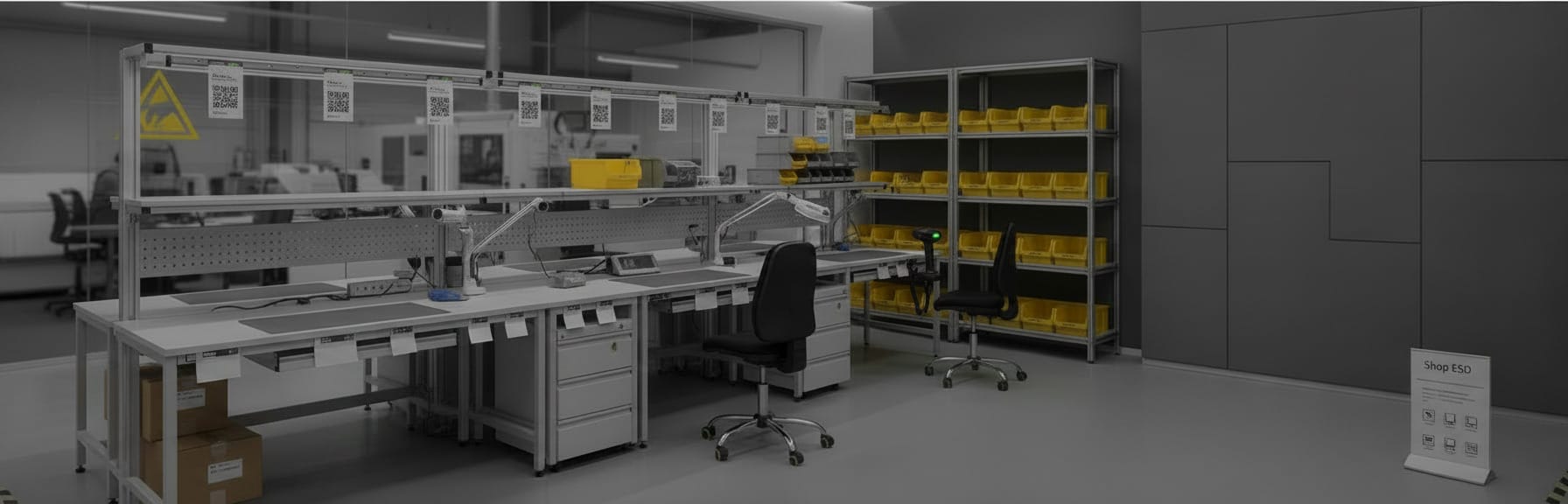
15. Did you know that ESD workbench surfaces are required to have a very specific resistivity range — between 10⁶ and 10⁹ ohms? Too conductive, and a discharge moves too fast and creates a damaging current spike. Too resistive, and the charge never dissipates at all. The entire science of ESD furniture is built around hitting that precise window.
16. Did you know that the ESD problem got significantly worse in the 1970s — not because people became careless, but because the industry switched from vacuum tubes to MOSFETs? The new transistor technology was far more sensitive to static, and the industry was completely unprepared for it.
17. Did you know that ESD is a serious concern far beyond electronics? Munitions, petrochemicals, pharmaceuticals, agriculture, printing, textiles, painting, and plastics manufacturing all have documented ESD-related industrial hazards. It’s not a niche electronics problem — it’s a universal physical phenomenon with industry-specific consequences.
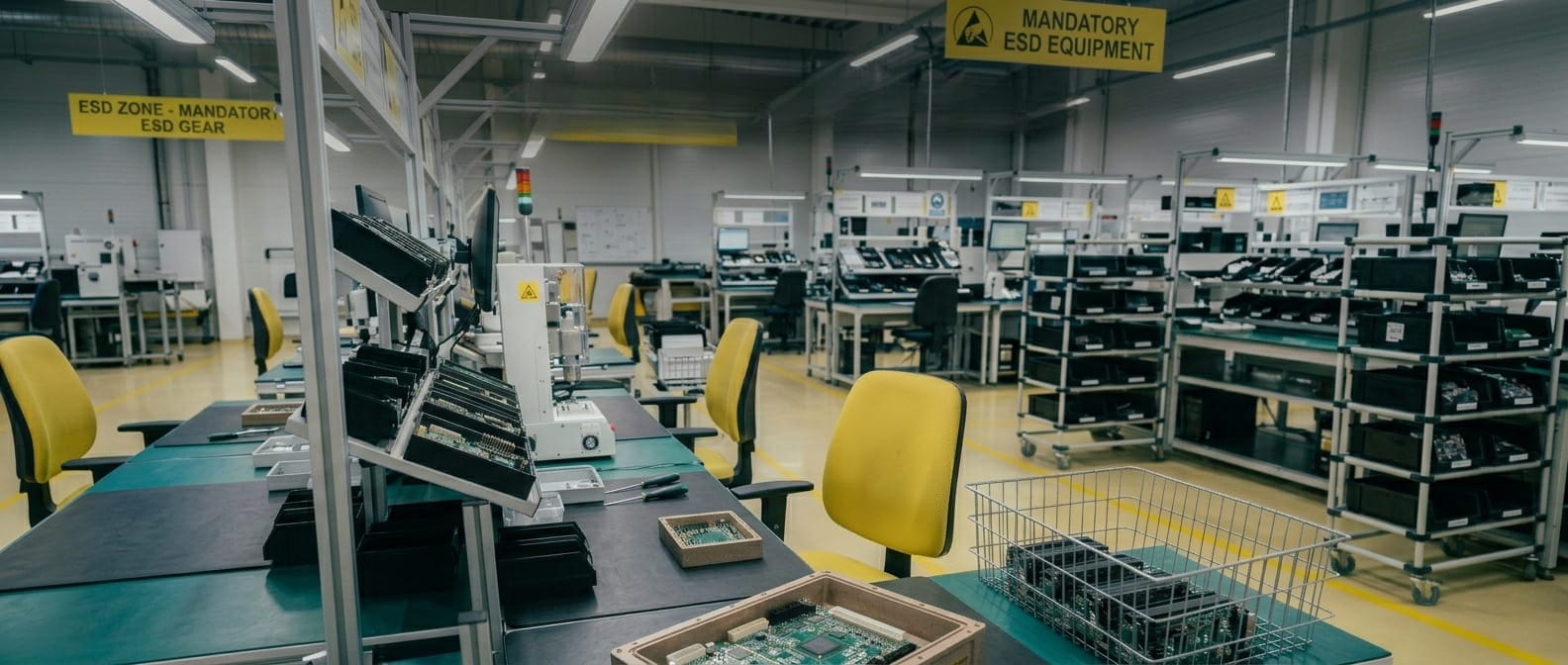
18. Did you know that a comprehensive EPA (Electrostatic Protected Area) for a ten-workstation assembly line typically costs between €3,000 and €8,000 to set up — while a single batch of ESD-damaged components or a warranty return campaign can cost multiples of that in a single incident?
19. Did you know that ESD standards are continuously tightening — not because the industry is becoming more cautious, but because transistors keep getting smaller? As geometries shrink and operating voltages drop, components become increasingly vulnerable. A standard that was compliant five years ago may no longer offer adequate protection for the devices being manufactured today.
20. Did you know that the ESD Association estimates that with a properly implemented ESD control program, the return on investment can exceed 1,000%? The investment in certified furniture, grounding systems, and training isn’t a cost centre — it’s one of the highest-yield risk mitigation decisions a production facility can make. vestibulum aenean semper et congue sapien erat a cum adipiscing sagittis in sodales. Fames at ullamcorper mus adipiscing consectetur fusce lectus vestibulum vivamus dictumst vivamus parturient nisl a aenean ornare consectetur dolor arcu a a scelerisque ad. In a dis vestibulum class a justo condimentum ad fermentum nostra lectus fames porta.