
 REQUEST A QUOTE








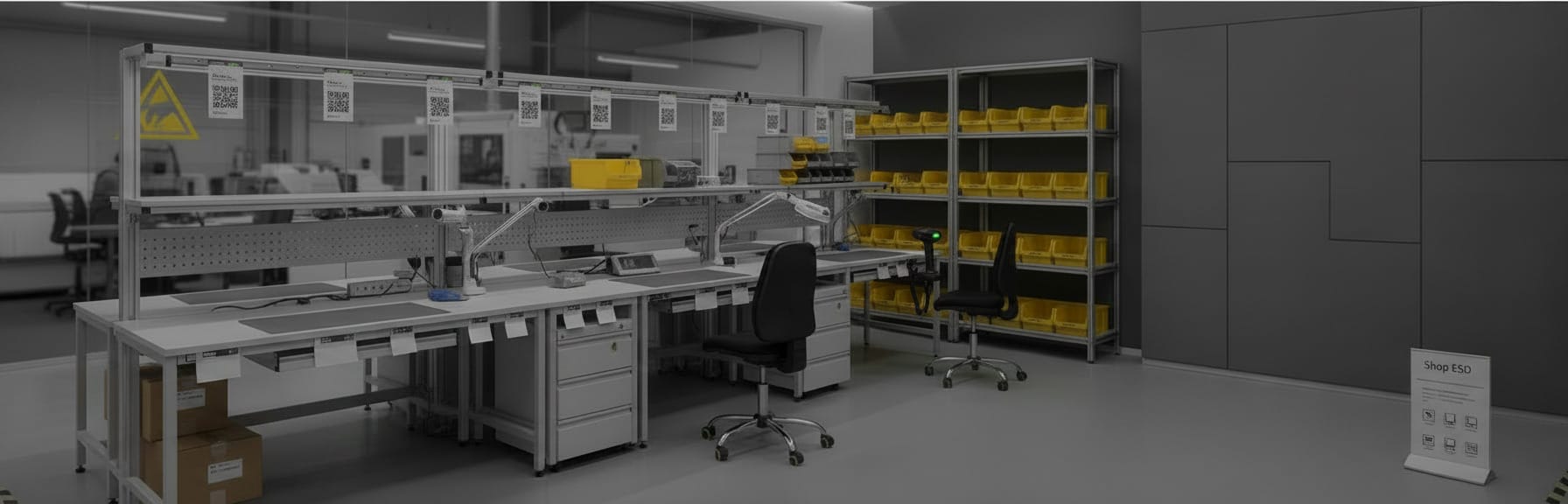
ESD Furniture: The Invisible Infrastructure Behind Modern Electronics Manufacturing

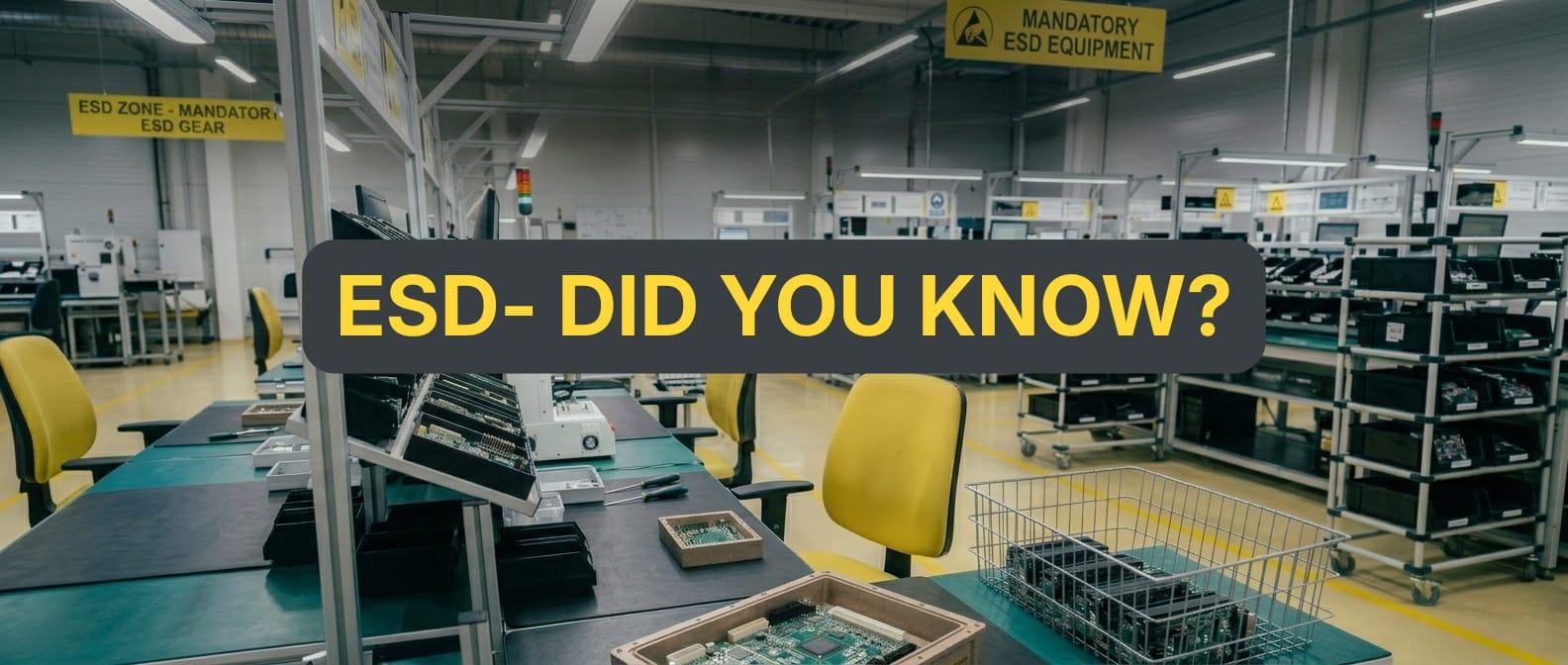
There is a quiet killer lurking on the production floors of electronics manufacturers worldwide. It has no colour, no smell, and it operates at speeds too fast for human perception. It is electrostatic discharge — and despite decades of awareness campaigns, engineering controls, and regulatory frameworks, it continues to extract a staggering toll from the industry. Conservative estimates place annual losses attributable to ESD in the range of half a billion to five billion US dollars. Some major manufacturers report that as many as 25% of all identified electronic part failures trace back to electrostatic events. And yet, in the hierarchy of production concerns, ESD furniture — the physical infrastructure that forms the first line of defence against these losses — remains persistently underappreciated.
This article examines ESD furniture not merely as a procurement category, but as a critical system component whose design, certification, and deployment have direct and measurable consequences for production yield, product reliability, and long-term operational cost.
The Physics Of The Problem
To understand why furniture matters in an ESD context, one must first appreciate the asymmetry at the heart of the problem. The human body is capable of accumulating electrostatic charges in the range of several thousand volts under ordinary conditions — walking across a floor, rising from a chair, removing a garment. Electronic components, meanwhile, can be permanently damaged by discharges as low as 25 volts. The gap between these thresholds is not merely significant; it is operationally catastrophic.
Critically, a substantial proportion of ESD damage does not manifest as immediate, detectable failure. Latent defects — partial degradations of semiconductor junctions or dielectric layers — pass quality inspection, ship to customers, and fail under real-world operating conditions weeks or months later. The downstream costs of warranty claims, field returns, and reputational damage dwarf the original cost of the damaged component. A single integrated circuit may cost a few euros; the chain of consequences triggered by its latent failure may cost orders of magnitude more.
What ESD Furniture Actually Does
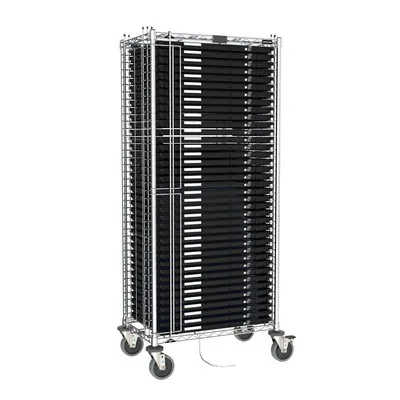
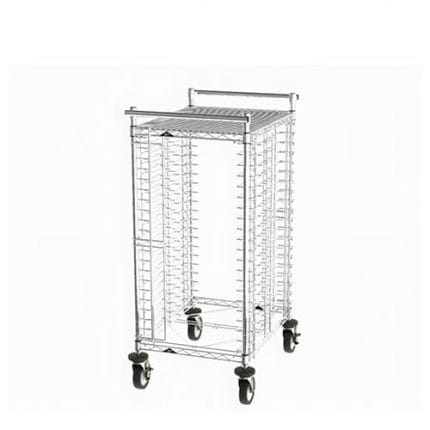
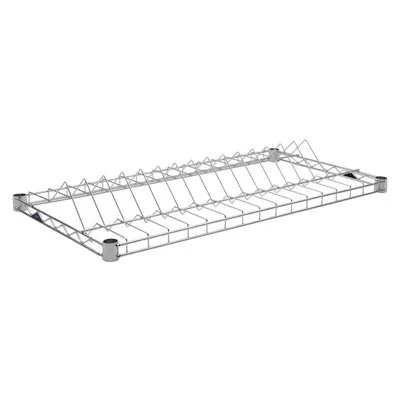
ESD furniture — encompassing workbenches, chairs, storage cabinets, shelving systems, and transport carts — is engineered to interrupt the mechanisms by which static charge accumulates and discharges in a production environment. The operative principle is controlled dissipation: rather than preventing charge entirely (which is physically impossible in most industrial contexts), ESD-rated furniture provides a controlled, resistive path through which charge can safely migrate to ground before it reaches a threshold capable of damaging sensitive components.
This is achieved through the selection and certification of surface materials with defined electrical resistivity ranges. Dissipative materials — those with surface resistivity between 10⁶ and 10⁹ ohms — are the standard specification for workbench surfaces, as they allow charge to dissipate at a rate slow enough to prevent damaging current spikes while fast enough to prevent dangerous accumulation. Conductive materials, with resistivity below 10⁵ ohms, are used selectively in grounding pathways and flooring systems. The integration of these materials across all contact surfaces — bench tops, chair upholstery, drawer interiors, cart decks — creates what the industry terms an Electrostatic Protected Area (EPA): a zone in which the electrostatic environment is actively managed rather than left to chance.
The Regulatory Framework
The design and deployment of ESD furniture does not occur in a vacuum. It is governed by a mature and increasingly rigorous international standards architecture. The primary reference documents are IEC 61340-5-1, which establishes the requirements for ESD control programs in environments handling electronic devices, and ANSI/ESD S20.20, the standard developed by the ESD Association (ESDA) that provides the comprehensive framework for Electrostatic Discharge Control Programs — covering everything from materials qualification to personnel training and compliance verification protocols.
The most recent revision of ANSI/ESD S20.20 was released in 2021, reflecting the industry’s ongoing adaptation to the increasing sensitivity of modern semiconductor devices. As transistor geometries have shrunk and operating voltages have fallen, the ESD vulnerability of electronic components has increased substantially. Standards bodies have responded by tightening threshold requirements and expanding the scope of compliance verification. For manufacturers seeking certification or operating in regulated supply chains — aerospace, automotive electronics, medical devices — adherence to these frameworks is not optional. It is a contractual and, in many cases, a legal requirement.
Ergonomics As A System Variable
A dimension of ESD furniture that receives insufficient attention in purely technical discussions is ergonomics. The relationship between ergonomic design and ESD performance is not incidental — it is systemic. A workstation that causes operator fatigue, encourages awkward postures, or requires frequent repositioning introduces movement-generated static events that even well-grounded surfaces cannot fully compensate for. Conversely, a well-designed ergonomic workspace reduces unnecessary motion, keeps operators correctly positioned relative to grounding contact points, and sustains the consistency of the human-to-ground conductive chain throughout an extended shift.
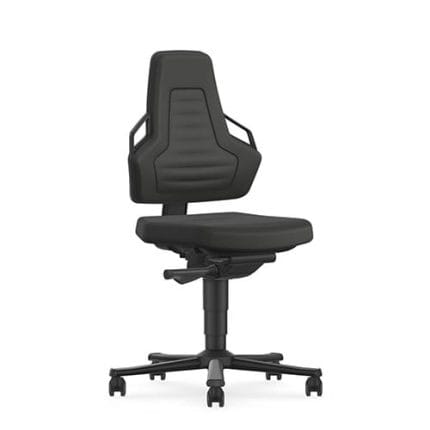
Modern ESD workstation design addresses this through height adjustability, modular accessory integration — monitor arms, lighting, bin rails, cable management — and the careful specification of seating that maintains continuous conductive contact between the operator and the grounded surface. ESD chairs equipped with dissipative casters and upholstery do not merely protect components; they protect the integrity of the entire EPA by ensuring that the most variable element in the system — the human operator — remains within the controlled electrostatic envelope at all times.
The Economic Case For Investment
The return on investment in properly specified ESD furniture is well-documented and consistently compelling. A 2025 study published in the Journal of Electrostatics demonstrated ROI figures exceeding 1,000% for comprehensive EPA implementations in electronics assembly environments. These figures are not surprising when considered against the cost structure of ESD damage: rework, scrap, latent field failures, warranty obligations, and the erosion of customer confidence each carry costs that accumulate rapidly against a fixed infrastructure investment.
The furniture itself represents a fraction of the total EPA implementation cost — which typically includes flooring, personnel grounding equipment, packaging, and environmental monitoring — yet it constitutes the permanent structural foundation upon which all other ESD controls depend. A workbench used across two shifts for ten years amortises its cost to negligibility. The components it protects — and the production batches, customer relationships, and audit certifications that depend on those components — do not.
Conclusion
ESD furniture occupies an unusual position in the industrial landscape: technically unglamorous, financially consequential, and frequently underspecified until something goes wrong. The evidence, however, is unambiguous. In any environment where sensitive electronics are handled, assembled, tested, or stored, the physical workspace is not a neutral backdrop to production — it is an active participant in the outcome. Specifying it correctly, certifying it to current standards, and maintaining it as part of a coherent ESD control program is not a cost to be minimised. It is a foundation to be built.